Tired of spending weekends trimming, watering, and weeding, but still want great curb appeal at your Villages home? You’re not alone. Many homeowners and downsizers here want a tidy, attractive yard that is easy to care for and friendly on water use. In this guide, you’ll learn Florida‑Friendly, HOA‑aware ideas that work in The Villages, including plant picks, bed layouts, irrigation tips, and how to navigate ARC approval. Let’s dive in.
Why low-maintenance works in The Villages
Hot, humid summers, a clear wet season, and mild winters shape what thrives here. Knowing this helps you choose plants and materials that look good with less effort. You also need to plan for hurricane season and wind, which influence plant selection and placement. For climate context, review the local patterns summarized for nearby Wildwood, including summer highs near 90°F and the June to November hurricane season window, in the Wildwood climate overview from Weather Atlas (local climate details).
The Villages uses Community Development Districts and an Architectural Review Committee (ARC). Many exterior changes, including landscaping, require written ARC approval. You can find the District’s ARC application and checklist on DistrictGov.org (ARC application and guidance). Some neighborhoods have specific rules about turf or groundcover, so always check your Declaration of Restrictions.
Water use is also regulated. The District adjusts irrigation schedules by area and may change them during water shortages. As of early 2026, the standard schedule was temporarily suspended for a period due to a regional shortage. Before you set timers or plan installations, confirm the current rules on the District’s irrigation schedules page (irrigation schedules).
Start with Florida‑Friendly principles
Florida‑Friendly Landscaping (FFL) gives you a simple, science‑based roadmap for a yard that looks great with less input. The nine principles include right plant, right place; watering efficiently; soil improvement and mulching; appropriate fertilization; attracting wildlife; managing pests responsibly; recycling yard waste; and reducing stormwater runoff. Review the state’s program for a helpful checklist (FFL principles).
Right plant, right place
Match each plant to sun, shade, and space so it reaches mature size without heavy pruning. Group plants by water need in compact beds so irrigation runs only where needed. UF/IFAS calls these hydrozones, and they are key to saving water and time (waterwise grouping and mulch basics).
Water efficiently
Use drip or micro‑spray in planting beds and reserve standard spray heads for turf. A smart controller with a rain or soil‑moisture sensor can skip cycles when conditions are right. Always set your controller to follow the District’s current schedule and restrictions (FFL principles; confirm rules on the District irrigation page linked above).
Build soil and mulch
Much of Central Florida has sandy soils that drain fast. Plant into properly amended backfill and cover beds with a 2 to 3 inch layer of organic mulch. Mulch conserves moisture, suppresses weeds, and improves soil over time. Refresh mulch as needed, usually every 6 to 12 months (mulch and establishment tips).
Fertilize and manage pests responsibly
Choose Florida‑adapted plants that need fewer inputs after establishment. Use targeted, label‑directed fertilizers only when needed, and manage pests by monitoring first, then treating only if thresholds are met. This approach supports a healthy, low‑maintenance landscape (FFL principles).
A simple plan for a Villages lot
Use this easy before‑and‑after concept to cut mowing and watering while keeping a neat, HOA‑friendly look:
- Keep a narrow turf strip for contrast and foot traffic.
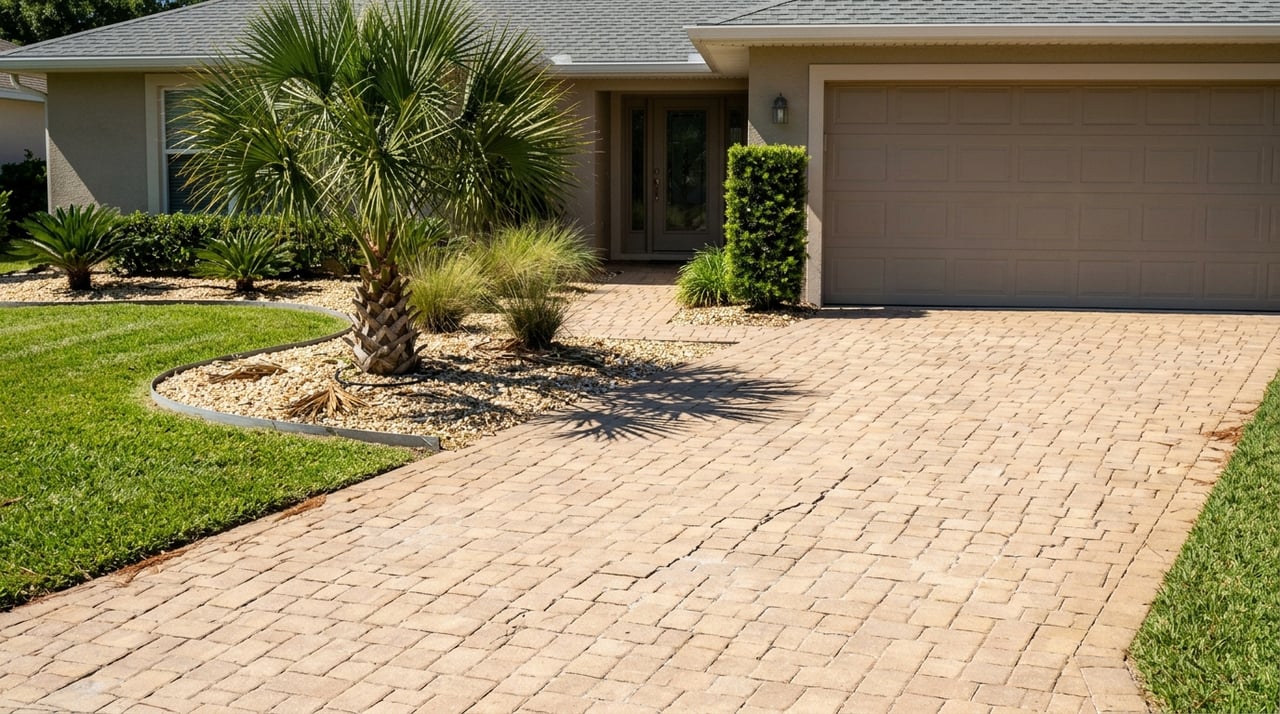
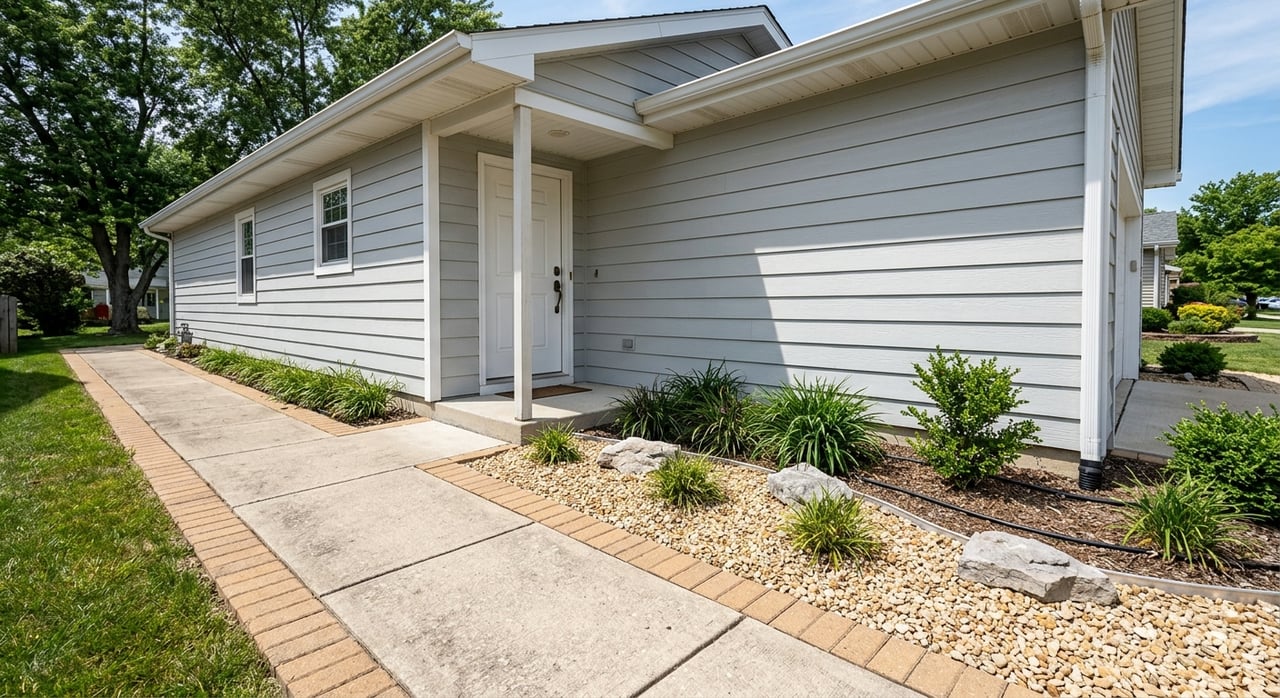
- Add wide, curved planting beds along the street and foundation. Group plants by water need and place drip lines under the mulch.
- Choose 2 to 3 small focal plants, such as a dwarf crape myrtle near the entry (dwarf crape myrtle guidance). Fill with low, evergreen structure like dwarf yaupon holly near the foundation (yaupon holly overview).
- Replace open lawn areas with Florida‑Friendly groundcovers, such as frogfruit or sunshine mimosa, or use ornamental perennial peanut in sunny spots for a walkable, flowering carpet (groundcover options).
- Add 2 to 3 clumps of pink muhly grass for a soft texture and fall color show (pink muhly profile).
- Finish with 2 to 3 inches of mulch and a smart controller that follows District irrigation schedules.
Low‑maintenance plant picks
Always check mature size and choose cultivars that fit your lot and sight lines. Plant in groups for visual impact and easier watering.
Small trees and focal points
- Dwarf crape myrtles (cultivars like ‘Apalachee’, ‘Yuma’, ‘Cherokee’) for long bloom and a tidy size (crape myrtle selection).
Foundation shrubs
- Dwarf yaupon holly (‘Nana’, ‘Schilling’s Dwarf’) for evergreen structure and low pruning (yaupon holly overview).
- Coontie for shade to part sun and a clean, architectural look.
- Firebush for seasonal color and pollinators in sunny beds.
Groundcovers that cut mowing
- Frogfruit and sunshine mimosa to fill sunny, low‑traffic areas with a flowering, low mat.
- Perennial peanut for a bright, low, walkable cover in full sun (groundcover options).
Ornamental accents
- Pink muhly grass for a drought‑tolerant, airy accent that shines in fall. Prune in late winter if needed (pink muhly profile).
If you keep turf
If you prefer some lawn, keep it modest. St. Augustinegrass offers a lush look but often needs more water and pest care. Zoysia and bermuda have tradeoffs in traffic tolerance and winter color, while centipede can be lower maintenance but prefers acidic soils. Match the turf to your shade, use, and upkeep budget, and shrink lawn areas where possible (UF turf selection overview).
Hardscape and irrigation upgrades
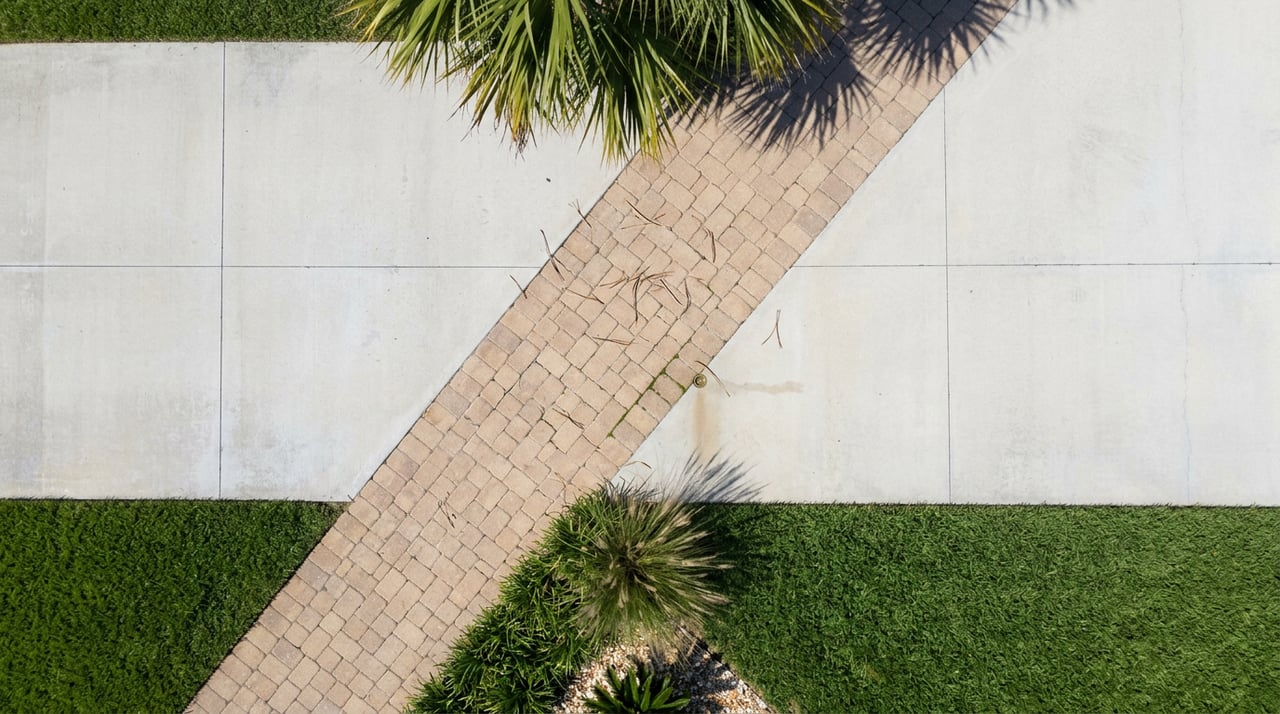
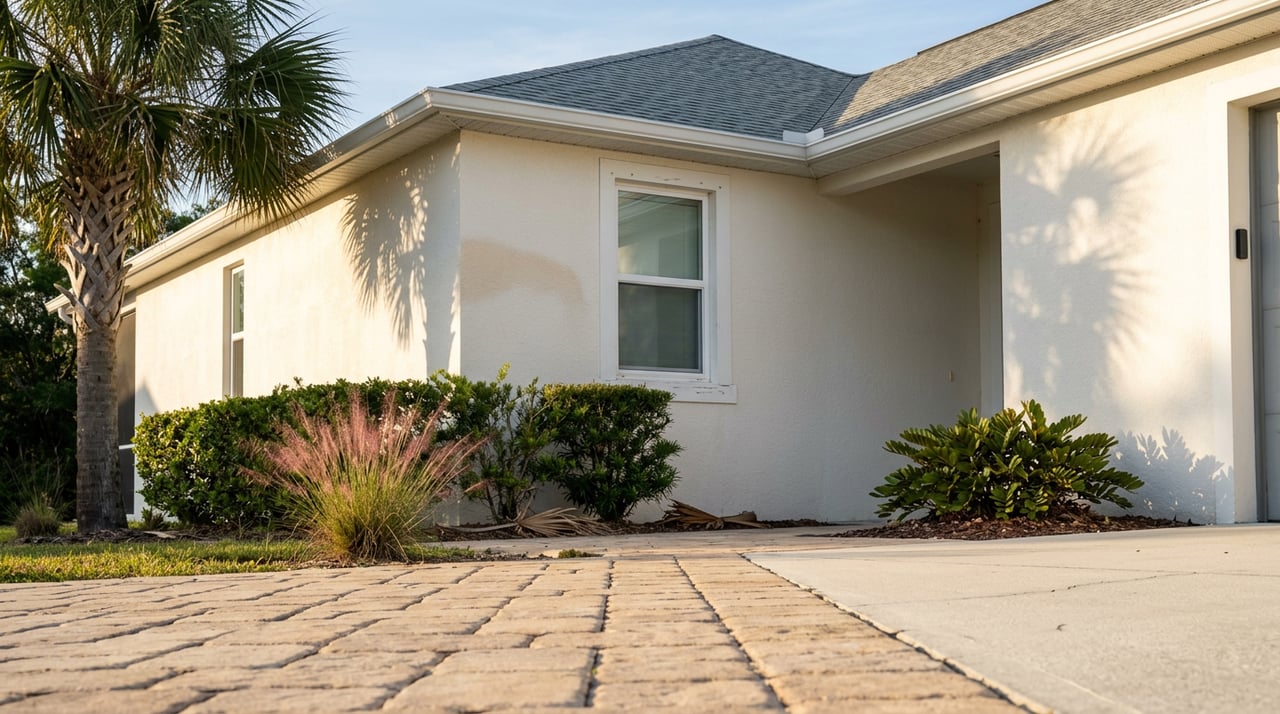
- Replace extra turf with permeable hardscape, like pavers or stone paths, to reduce mowing and guide stormwater into planted areas. This pairs well with Florida‑Friendly runoff practices (Florida‑Friendly guidance).
- Use dedicated valves for beds vs. turf, with drip or micro‑spray for plants. Add a smart controller with a rain or soil‑moisture sensor, then set it to follow District watering rules (FFL irrigation best practices).
- Choose simple, wide bed lines and one mulch type for a clean, cohesive look that reduces edging time (bed and mulch basics).
- Use containers at the entry for seasonal color without adding in‑ground maintenance. Group pots by water needs and use quality potting mix (Florida‑Friendly guidance).
ARC and HOA approval made easy
You usually need ARC approval before you change landscaping. Here is a clear process to follow:
- Review your neighborhood’s Declaration of Restrictions and the District ARC rules. Then download the current ARC packet (ARC application and checklist).
- Prepare a simple plan: site sketch, plant list with botanical names and mature sizes, mulch and hardscape materials, irrigation changes, and timeline for installation and establishment.
- If you are replacing turf, note the method (sod, plug, or sheet‑mulch) and how you will meet groundcover requirements within the expected timeframe.
- If questions arise, remember Florida statutes support Florida‑Friendly landscaping while allowing associations to use reasonable approval processes. You can reference s. 373.185 in your submission (Florida statutes overview).
Sample plant list line you can copy:
- Dwarf yaupon holly (Ilex vomitoria ‘Schilling’s Dwarf’) – 3 ft H x 4 ft W at maturity, full sun to part shade, drip zone 1, spaced 3 ft on center.
Your first year maintenance plan
- Establishment year (first 6–12 months): check weekly or biweekly. Water per your plan and current District rules, pull small weeds, and lightly shape shrubs. Expect more attention early, then a big drop after roots establish (establishment guidance).
- Spring: refresh mulch to 2–3 inches, check irrigation for leaks or clogs, and do light pruning as needed (mulch and irrigation basics).
- Summer: watch for heavy rain and dry spells, and secure containers before storms. Hurricane season runs June through November, so remove weak or damaged branches ahead of time (local climate details).
- Autumn: do minor cleanup and remove any storm‑damaged material.
- Winter: water sparingly if rainfall is adequate. Cut back ornamental grasses in late winter to early spring, then let fresh growth emerge (pink muhly profile).
Quick checklist
- Check your Declaration of Restrictions and download the ARC application.
- Sketch wide, simple bed lines and reduce lawn to a narrow, useful strip.
- Group plants by water need and install drip for beds.
- Pick Florida‑Friendly, right‑size plants and confirm mature dimensions.
- Spread 2–3 inches of mulch and refresh as needed.
- Set a smart controller to follow current District irrigation rules.
- Keep a one‑page plant list with botanical names and mature sizes for ARC.
Ready to refresh your yard and your lifestyle? If you are planning to buy or sell in The Villages, smart, low‑maintenance curb appeal can make a real difference. For local insight on what today’s buyers appreciate and which updates add value, connect with Amanda Fincher, LLC for friendly, expert guidance.
FAQs
What are the best low‑maintenance plants for The Villages climate?
- Choose Florida‑adapted picks like dwarf crape myrtle for color, dwarf yaupon holly for evergreen structure, coontie for shade spots, and pink muhly grass for seasonal interest, all supported by UF/IFAS profiles.
Do I need ARC approval to replace lawn with groundcover in The Villages?
- In most cases yes; many exterior changes require ARC approval, so review your Declaration of Restrictions and submit the District’s ARC application with a clear plan and plant list.
How can I cut irrigation water use while following local rules?
- Group plants by water need, use drip or micro‑spray in beds, add a smart controller with a rain or soil sensor, and set it to follow the District’s current irrigation schedules.
What turf is best if I want to keep a small lawn?
- Match turf to your sun and upkeep goals: St. Augustinegrass offers a lush look but needs more care; zoysia and bermuda trade winter color for traffic tolerance; centipede can be lower‑maintenance but prefers acidic soils.
How do Florida‑Friendly Landscaping principles help reduce maintenance?
- They guide you to pick the right plants, water efficiently, mulch properly, and use targeted care only when needed, which lowers time, water, and fertilizer while keeping curb appeal high.