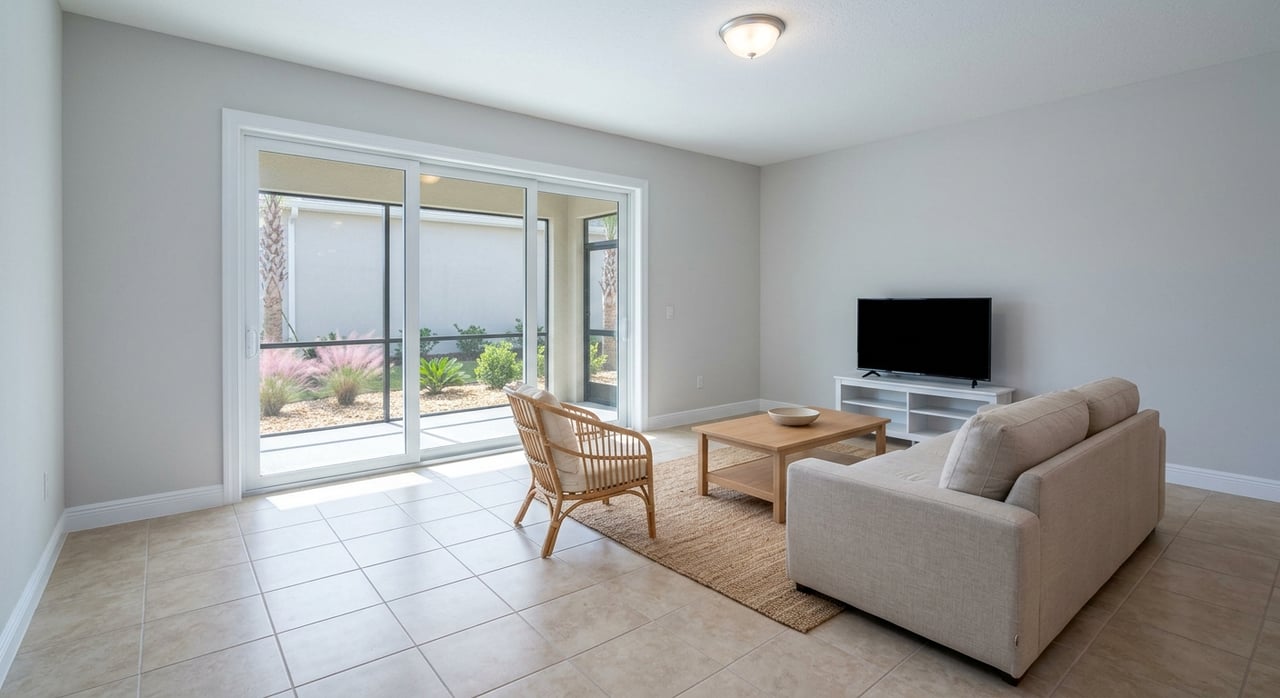
Wondering whether you should sell your Villages home furnished? In this market, that choice can shape how quickly buyers connect with your home and how smooth the sale feels from list to closing. If you are downsizing, relocating, or helping a loved one prepare a property, it helps to know when furniture adds value and when it gets in the way. Let’s break down how furnished sales work in The Villages and how you can make the right call for your home.
Why furnished homes stand out
The Villages has a lifestyle that attracts buyers who often want simplicity and convenience. The community has more than 150,000 residents, and official community information says about 75% of residents live there full time while many also travel as part of their lifestyle. That makes move-in-ready homes especially appealing for buyers who want an easy transition.
The area also leans into a try-it-before-you-buy-it experience. The Villages promotes a 4 to 7 night Lifestyle Preview stay in a private villa, which supports the idea that buyers are often shopping for not just a house, but a ready-to-enjoy lifestyle. In that kind of market, a clean and cohesive furnished home can feel like a natural fit.
Current listing sites also show that furnished presentation is common in The Villages. Zillow currently shows dozens of fully furnished homes, and local home search platforms feature turn-key furnished options as well. That does not mean every home should be sold furnished, but it does show buyers in this market are used to seeing that option.
When selling furnished makes sense
A furnished sale usually works best when your home already presents well and the furniture supports the space. If the home feels neat, updated, and easy to picture living in, furnishings can help reinforce that move-in-ready story. This can be especially useful for out-of-area buyers, seasonal users, and downsizers who may not want to manage a full move right away.
In The Villages, many buyers are drawn to low-maintenance living. If your furniture helps show that lifestyle clearly, it may help your listing stand out. A turnkey setup can reduce friction for buyers who want a faster, simpler move.
National staging research supports the idea that presentation matters. According to the National Association of Realtors, 83% of buyers’ agents said staging makes it easier for buyers to visualize a property as their future home. The same report found that 49% of sellers’ agents said staging reduced time on market.
Signs your home may sell better furnished
- Your furniture is clean, cohesive, and scaled well for the rooms
- The home already feels bright, open, and well maintained
- You expect interest from out-of-area or relocation buyers
- The property fits a turnkey or low-effort move-in appeal
- You want to highlight ease and convenience in your marketing
When unfurnished may be the better choice
Not all furniture helps a sale. If pieces are dated, oversized, heavily personalized, or visually busy, they can make rooms feel smaller and distract from the home itself. In those cases, selling furnished can work against you.
This is where many sellers benefit from a lighter approach. The same NAR report notes that many sellers’ agents do not stage every listing and instead focus on decluttering or fixing issues first. That can be the smarter move if your home has good bones but the furniture does not help show them off.
If you own valuable or sentimental furniture, there is also a practical side to consider. You may not want those items folded into the sale at all. Removing them before listing can protect what matters to you and keep buyers focused on the home rather than trying to assign value to your personal property.
Signs your home may show better unfurnished or lightly furnished
- The furniture looks dated or too specific to your taste
- Large pieces make rooms feel tight
- The home would benefit more from decluttering than full furnishing
- You want to keep certain items for your next home
- The furnishings do not match the style buyers expect in the space
The middle ground: partial furnishing
For many Villages sellers, the best answer is not fully furnished or fully vacant. It is somewhere in between. A partially furnished approach can give buyers enough context to understand the room while keeping the overall look clean and open.
This strategy works well in the rooms that matter most visually. NAR’s 2025 report says staging is most important in the living room, primary bedroom, and kitchen. That means you may not need to keep everything in place to make a strong impression.
Rooms to prioritize
- Living room: Show scale, seating flow, and openness
- Primary bedroom: Help buyers picture comfort and function
- Kitchen: Keep counters clear and the space simple and fresh
In many cases, less really is more. A home that feels airy and easy to maintain often lands better than one filled wall to wall.
How furnishing affects buyer perception
Furniture does more than fill a room. It tells a story about how the home lives. In The Villages, where many buyers are thinking about convenience, comfort, and a smoother move, that story matters.
If your furnishings support a polished, low-effort lifestyle, they can help buyers connect emotionally. If they feel mismatched or heavy, they can create doubt. That is why the decision should not be based on whether you can leave the furniture, but whether it helps the home present at its best.
This is also where local strategy matters. A furnished villa may make perfect sense, while a different property may benefit from selective removal and professional presentation. The goal is not to keep more. The goal is to market smarter.
Florida contract details to know
If you decide to sell your home furnished, the contract details matter just as much as the presentation. In the Florida Realtors and Florida Bar residential contract, the sale includes the real property plus any specified personal property. If furniture or other personal items are meant to stay, they need to be listed in the contract.
This is important because what appears in the MLS does not automatically become part of the sale. Florida Realtors specifically notes that the contract controls what stays and what goes. So if a buyer expects furniture to remain, that agreement needs to be written clearly.
The contract form also states that included personal property is part of the purchase price and has no contributory value. In simple terms, that means the furniture is usually treated as included, not separately priced. This is one more reason to be thoughtful about what you leave behind.
A simple decision framework
If you are trying to decide, start with the home’s overall presentation and your likely buyer. In The Villages, furnished homes can perform well when they feel clean, coordinated, and easy to move into. But if the furniture does not elevate the space, a partial or vacant approach is often safer.
Here is a simple way to think it through.
Ask yourself these questions
- Does the furniture make the home feel larger or smaller?
- Does it support a move-in-ready lifestyle?
- Would an out-of-area buyer see convenience or extra work?
- Are there items you do not want included in the sale?
- Can your pricing, photos, and contract all match the same plan?
If you answer those questions honestly, the right direction usually becomes clearer.
Match the strategy to the marketing
Once you choose furnished, partially furnished, or vacant, every part of the listing should match that decision. Your inventory of what stays should be clear from the start. Your photography should reflect the look you want buyers to remember.
That is especially important in a visually driven market like The Villages. Professional photos and a strong online presentation can help buyers understand the home before they ever step inside. If the furnishings are part of the value story, they should be intentional, not accidental.
This is also where personalized guidance can make a difference. Every home has a different floor plan, furniture mix, and buyer profile. A strategy that works for one villa may not be the best fit for another.
For many sellers in The Villages, the bottom line is simple. Sell furnished when the furniture helps tell a clean, turnkey story. If it does not, declutter, edit, and present the home in a way that lets the space shine.
If you are weighing whether to sell your Villages home furnished, a local pricing and presentation strategy can help you avoid guesswork. For thoughtful guidance, staging insight, and a plan tailored to your home, connect with Amanda Fincher, LLC.
FAQs
Should you sell a home furnished in The Villages?
- It often makes sense if the furniture is clean, cohesive, and supports a turnkey, move-in-ready feel that fits The Villages lifestyle.
Do furnishings help a home sell faster in The Villages?
- They can, especially when they help buyers visualize the home clearly, but cluttered or dated furniture can have the opposite effect.
What rooms matter most when staging a Villages home?
- The living room, primary bedroom, and kitchen are the most important rooms to prioritize based on staging research.
Does furniture automatically stay with a Florida home sale?
- No. In Florida, personal property such as furniture must be specifically listed in the contract if it is meant to stay.
Can you sell a Villages home partially furnished?
- Yes. Partial furnishing is often a smart middle-ground option when some pieces help the home show well but others do not.
What is the safest way to handle furniture in a Villages listing?
- Decide early what stays, align the list price and photos with that plan, and make sure the contract clearly states which personal property is included.